 店
How to Choose a Bluetooth Module: BLE vs Classic vs Dual-Mode vs Wi-Fi Combo
What Is a Bluetoothモジュール?
あ Bluetoothモジュール is a pre-certified radio, プロトコルスタック, and antenna interface on one small PCB. The host MCU talks to it over UART, USB, SDIO, or PCM/I2S. What the end user actually gets is the profile you enable: a sensor notification, a serial cable replacement, music, a phone call, or a setup link into a Wi-Fi network. Version numbers such as 5.3 または 5.4 describe the specification. They do not tell you whether the part can play audio, survive on a coin cell, or share 2.4 GHz with Wi-Fi.
| Module type | Radio | What it is good at | こんな方に最適 |
|---|---|---|---|
| BLEモジュール | ブルートゥース Low Energy only | Short bursts, long sleep, phone apps via ガット | タグ, ウェアラブル, locks, センサー |
| クラシック Bluetoothモジュール | BR/EDR | SPP serial, HFP calls, basic A2DP | Legacy dongles, simple headsets, older phones |
| Dual-mode Bluetoothモジュール | クラシック + BLE | A phone app and a Classic link at the same time | Printers, instruments, メートル, POS |
| Bluetoothオーディオモジュール | A2DP, HFP, または ザ・オーディオ | Music and calls, often with a second BLE control link | Speakers, TWS, car audio, USB transmitters |
| Wi-Fi + Bluetooth combo | Wi-Fi plus Bluetooth | Cloud, 太田, and phone pairing in one package | ゲートウェイ, dashcams, appliances, IVI |
How to Choose a Bluetooth Module for the Product You Are Actually Building
Start from the link the product must keep, then pick the silicon. A door sensor, a portable printer, and a motorcycle dash can all say “Bluetooth 5.3” on the box and still need three different modules. BLE is built for months on a small battery. Classic Bluetooth still carries serial data and stereo audio to phones that expect BR/EDR. Dual-mode parts exist because many products need both. Audio modules add a codec and a real audio port. A Wi-Fi Bluetoothモジュール adds an IP path, and it also adds a coexistence problem on 2.4 GHz.
BLE Module: 低エネルギー, Built for Sleep
あ BLEモジュール implements Bluetooth Low Energy and skips BR/EDR. Phones talk to it with ガット. Beacons and tags can advertise without holding a connection. ブルートゥース 5 adds the 2M PHY for a faster burst and the Coded PHY for longer range at a lower rate. Later releases add direction finding, ザ・オーディオ で 5.2, connection subrating in 5.3, and periodic advertising with responses in 5.4. A BLE 5.4 sensor module still cannot stream A2DP music.
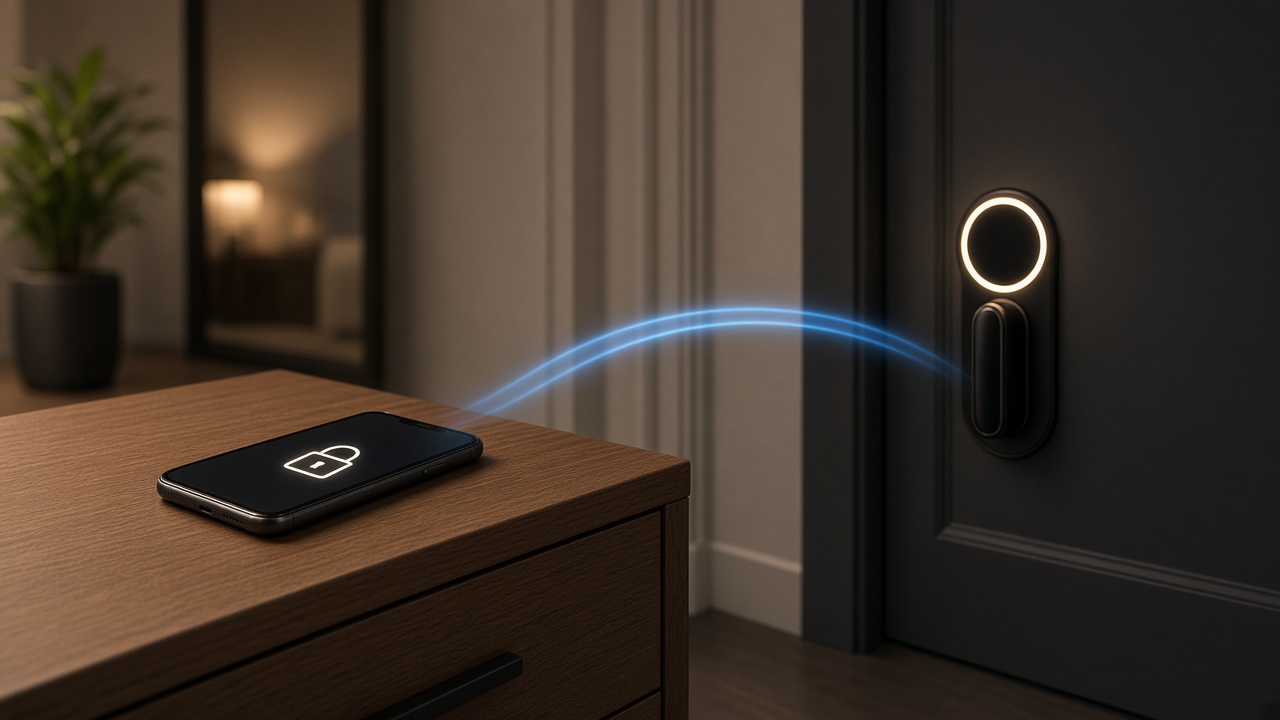
The phone wakes the lock, then the lock goes back to sleep. That is the BLE use case.
こんな方に最適: asset tags, ウェアラブル, medical patches, smart locks, HID, and any design that sleeps most of the day.
Weak fit: music, Classic SPP apps, and file transfers measured in megabytes.
Battery life follows the connection interval and the advertising duty cycle. Four links at a 30 ms interval will not last like one link at 1 second, even when both designs use the same BLEモジュール. Read the sleep current with RAM retained, at your interval, on your board. A datasheet number taken with the radio off is not the product current.
Classic Bluetooth Module: SPP, Calls, and Basic Stereo
Classic Bluetooth is BR/EDR. The profiles that still 案件 in products are SPP for serial data, HFP for calls, and A2DP plus AVRCP for stereo control. Many industrial dongles and older accessories speak only Classic. A Classic Bluetoothモジュール is the right part when the other end will never open a ガット connection.
こんな方に最適: cable-replacement serial on Android, simple headsets, and basic speakers aimed at older phones.
Weak fit: a year on a coin cell, large sensor networks, and Auracast broadcast.
iPhone apps do not get the same SPP access Android apps do. If the first customer is an iPhone, plan on BLE GATT from the start. Classic audio also lands on SBC unless both ends negotiate something better. Codec choice is a separate decision, covered in the Bluetooth audio codec comparison.
Dual-Mode Bluetooth Module: One Radio, Two Stacks
A dual-mode Bluetooth module runs Classic and BLE on one chip. The phone app uses GATT for status, 構成, and firmware hints. A receipt printer, barcode host, or audio path uses SPP or A2DP. That split is why dual-mode shows up in portable printers, instruments, and vehicle clusters that must both display data and play a prompt.
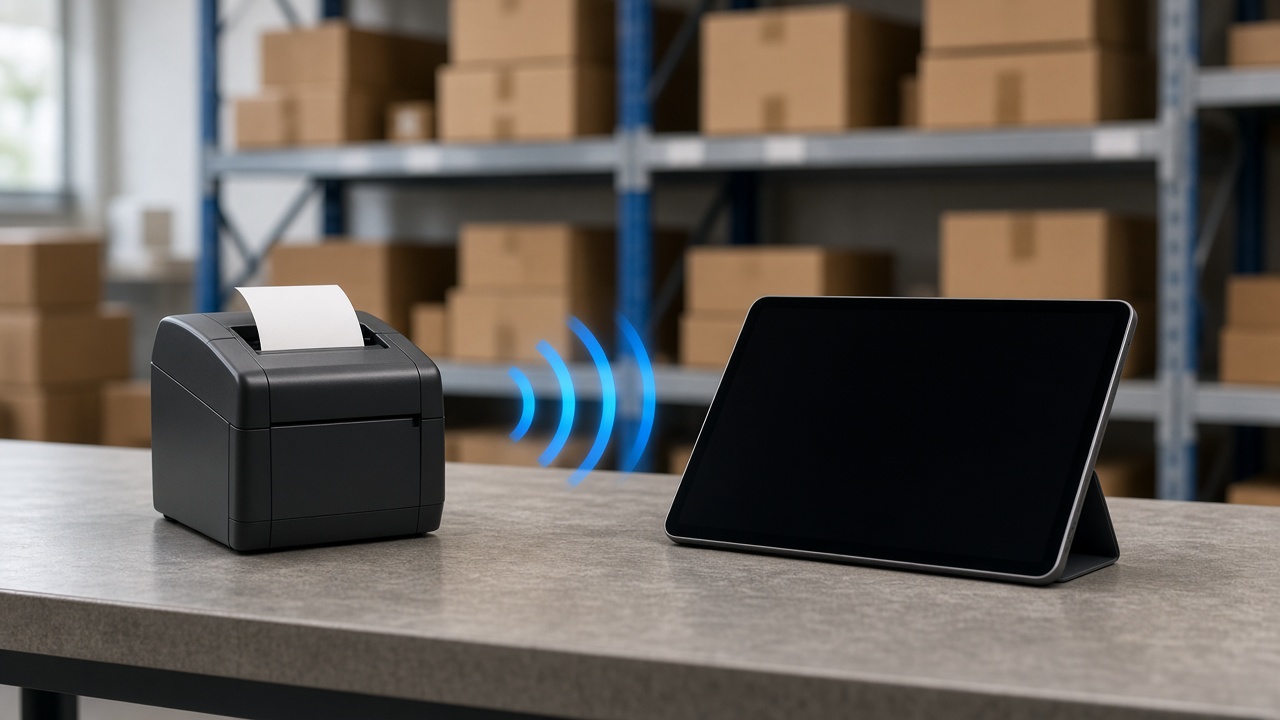
The tablet keeps an app connection while the printer still accepts a Classic Bluetooth print job.
こんな方に最適: プリンター, POS, メートル, and any product that must talk to a modern app and a Classic peripheral.
Weak fit: the cheapest sensor tag, and hi-res listening that really wants an audio SoC.
Dual-mode firmware is larger, and the peak current follows the Classic radio whenever that link is up. Do not size a coin cell from the BLE sleep line if the product also opens SPP or plays audio. Master/slave behavior matters here too: a module that can be central is required when your product must scan and connect outward, not only wait for a phone.
Bluetoothオーディオモジュール: The Profile and the Codec Pick the SKU
あ Bluetoothオーディオモジュール is not “a BLE module with a speaker pin.” Music needs A2DP on Classic Bluetooth or LC3 on ザ・オーディオ. Calls need HFP or the LE Audio voice path. The electrical output is usually analog left/right or I2S/PCM into a codec or amplifier. aptX, LDAC, and LHDC are licenses and phone-ecosystem choices. An aptX-capable module still plays SBC when the phone offers only SBC.
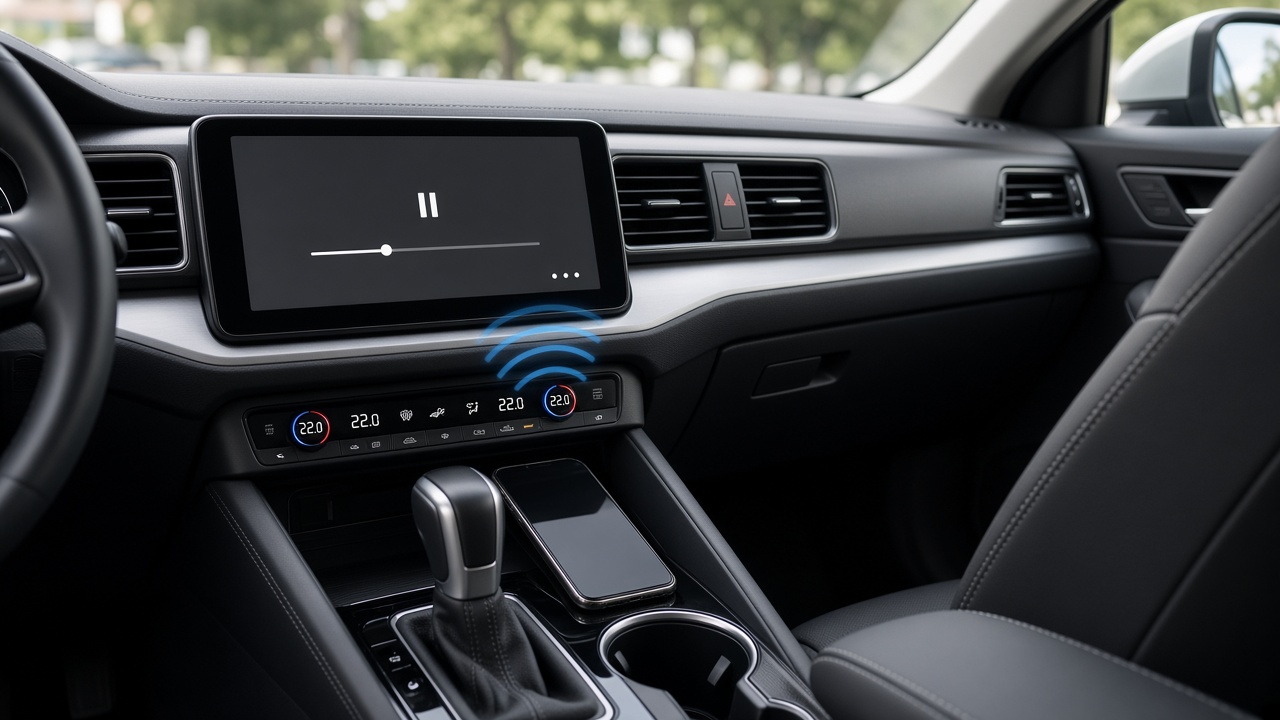
The phone streams music straight to the head unit. That is an audio link, not a sensor link.
こんな方に最適: wireless speakers, TWS earbuds, car and motorcycle audio, そして USB audio dongles.
Weak fit: a door sensor, ある ビーコン, or a product whose only link is a BLE UART.
Settle codec licensing, the phone brands you sell to, and the I2S clock plan in the same design review as the module. Acoustic tuning cannot add a codec the firmware was never licensed to run.
Wi-Fi + Bluetooth Combo Module: Cloud and a Phone on One Part
A Wi-Fi Bluetooth module puts both radios in one package so the product can join a router and pair with a phone. Wi-Fi carries cloud data, video, and large OTA images. Bluetooth carries provisioning, a nearby app, and accessories. A combo module saves a second RF layout and a second antenna decision. It does not remove 2.4 GHz contention. Combo firmware is supposed to arbitrate the two radios. Throughput still depends on antenna isolation, the driver, and whether both links are busy at once.
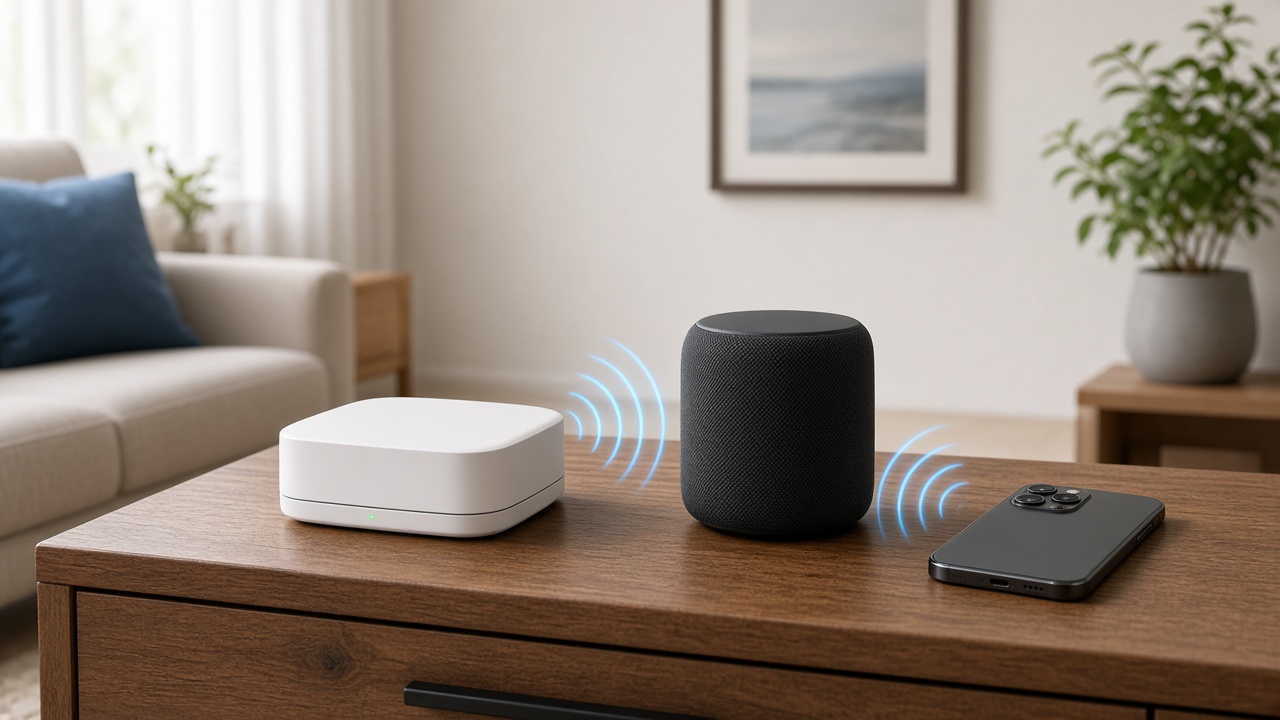
The gateway stays on the home network. The speaker and the phone stay on the short-range link beside it.
こんな方に最適: ゲートウェイ, dashcams, appliances, aftermarket head units, and IVI.
Weak fit: a battery tag, or any product that never needs an IP address.
Use 5 GHz or 6 GHz Wi-Fi when the product must move video while Bluetooth stays on 2.4 GHz. あ 2.4 GHz-only combo can be the right cost point for a sensor gateway. It is a weak choice for wireless CarPlay-class video. Ask for a coexistence test with your real traffic, not a slogan on the module name.
How the Bluetooth Module Changes the Rest of the Design
The module decision sets power, the antenna, the connector, and the certification plan. Changing it after the enclosure is tooled is expensive.
力. BLE spends most of its life asleep, then takes a short transmit peak. Classic and audio modules hold the radio up for the whole stream. Combo modules add a Wi-Fi current peak during association and OTA. Size the regulator for the peak, and size the battery for the average at your real duty cycle.
Antenna and RF. A module with a PCB antenna needs the keep-out the vendor drew: no copper, no screws, no battery, no LCD metal under that end of the board. A module with an RF pad needs a 50 ohm path and the matching network from the reference design. Long range is a Coded PHY or a better antenna, not a higher Bluetooth version printed on the label. Wi-Fi and Bluetooth on one board need either the combo’s coexistence logic or physical separation you can measure.
ホストインターフェース. BLE sensor products are usually UART or a simple SPI. Audio products need I2S or analog plus a control UART. Combo products often need SDIO or USB and a driver that matches the host kernel. An AT-command firmware ships faster. A full stack on the host is more flexible and slower to certify. Write down which one you are buying.
認証. A module that already has Bluetooth Qualification, FCC, CE, or SRRC reduces the radio work. It does not automatically certify the finished product. The end device still needs its own filing when the antenna, enclosure, or co-located radios change the emission. Freeze the antenna and the second radio before you book the lab.
Feasycom Bluetooth Modules by Job
フィジーコム groups modules by the link they serve, from BLE and dual-mode Bluetooth modules に Wi-Fi and Bluetooth combo modules. Match the job first, then the part number.
- FSC-BT2044GI そして FSC-BT3431: small BLE 5.1 modules with master and slave roles, for tags, センサー, and compact battery products.
- FSC-BT2024NI: Nordic nRF54L15 BLE 6.0 module with Thread, ジグビー, そして アオア/AoD, for direction finding and multiprotocol devices.
- FSC-BT3721V: Silicon Labs EFR32BG22 BLE 5.3 module aimed at automotive and other designs that need a low-energy SoC.
- FSC-BT9101AI: デュアルモードBluetooth 5.3 module for products that need Classic throughput and a BLE link.
- FSC-BT1026C: クアルコム QCC3024 ブルートゥース 5.1 audio receiver for TWS and speaker designs.
- FSC-BT1026D: クアルコム QCC3034 ブルートゥース 5.1 audio receiver with aptX, for Android-centric listening products. Confirm the aptX license for your firmware before layout.
- FSC-BT2002RV: Realtek RTL8761CTV module with Classic Bluetooth and LE Audio on Bluetooth 5.3.
- FSC-BT1104QI: Qualcomm QCC3095 Bluetooth 5.4 audio receiver for newer audio designs.
- FSC-BW121: Realtek RTL8821CS Wi-Fi 5 とBluetooth 5.3 combo for dashcams, aftermarket head units, and appliances.
- FSC-BW3583V: Wi-Fi 6 とBluetooth 5.4 combo for automotive and gateway products that need dual-band Wi-Fi beside the Bluetooth link.
Pick the module in the same review where you pick the battery, the antenna keep-out, and the phone ecosystems you will support. A BLE module will not become an audio product after the enclosure is cut, and a combo module will not become a coin-cell tag because the box says low power.